


Interior designs in luxury homes are usually characterized by the uniqueness that the designer wishes to bring into a room. Translucent onyx marble is among such materials whose beauty lies in the colors and patterns it contains, as well as its capacity to let light pass through. This quality, combined with a smart backlighting design, turns any surface into something special.
Be it statement walls in luxury homes or high-end hospitality interior designs, onyx marble design is a wonderful chance for designers to use natural stone in combination with lighting to impress. The use of translucent onyx in homes in Delhi NCR can transform a living room, bar, foyer and entertaining area.
What Makes Translucent Onyx Marble Unique?
In contrast to many traditional marble types, some onyx marbles let light shine through their thin layers. Thus, this stone demonstrates the layers, different colours and natural patterns.
The colour of onyx is usually determined by the variety: it may be honey, cream, amber, green, pink and even white. Moreover, each onyx slab has a unique design which becomes an additional reason to choose slabs for expensive interiors.
Translucency highlights the natural properties of the stone instead of just showing its surface.
The light effect of this stone may vary depending on the stone, light source and design of the lighting system.
The thing is that not all onyx slabs have the same degree of translucency.
Cleaning of Italian Marble in a Proper Way
Learning how to clean Italian marble involves applying gentler methods to prevent damage. Some of the ways in which Italian marble may be cleaned may lead to greater damages than the initial damage.
1. Removal of Dust and Dirt Frequently
Use microfibre dust mops or a non-abrasive clean cloth to remove any dust or grit from the marble. This will ensure that the polishing of the marble is not dulled due to dust and dirt.
Use plain water or the appropriate natural stone cleaner in cleaning. Do not leave any excess water on the marble after cleaning, but dry the floor with a cloth when necessary.
2. Remove Any Spillages as Soon as Possible
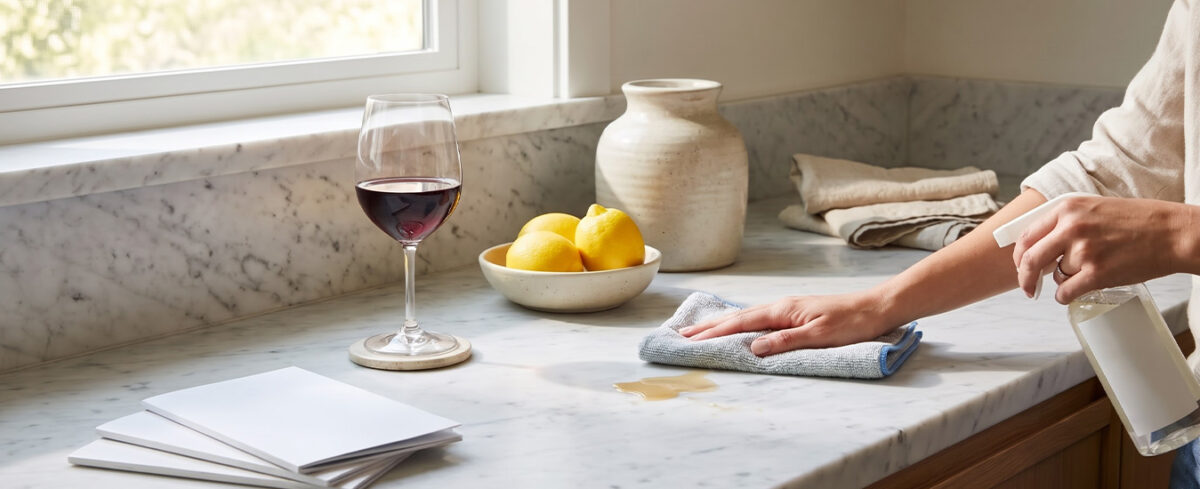
Any spillage such as tea, coffee, cooking oil, and juices should be attended to immediately to reduce the chances of getting stains. Instead of spreading the stain, one needs to blot it.
Clean the affected area by using an appropriate stone cleaner, then wipe it. However, stains may still occur even if one does this as a preventive measure because acidic materials tend to etch them.
3. Stay Away from Aggressive Household Cleaning Products
Avoid using vinegar, lemon juice, aggressive toilet bowl cleaner, abrasive powder, or abrasive sponges because it may cause some form of damage that will result in stains and fine scratch marks on the stone surface.
In any case, it is vital to be sure about the suitability of the cleaning agent before applying it on your marble. If uncertain, make a test application on an unnoticeable area according to the instructions.
How to Remove Yellow Stains From White Marble
These yellow spots on white marble may appear obvious but their removal may depend on the cause of their occurrence. It is necessary to determine the cause before anything else when removing the yellow stains on white marble.
Determine the Cause of the Discoloration
The staining could be caused by moisture under the stone, by the presence of iron oxides in the marble, or inappropriate sealants and residues from the installation process. Discoloration is also caused by oils and other substances.
When the spots keep reappearing or occur extensively, moisture and installation issues should be looked into rather than the stain on the surface.
Appropriate Treatments for Stains
Certain organic and oil stains can be dealt with using a poultice for natural stone. Nevertheless, what product to use will depend on the type of the stain and the type of the marble finish.
Bleaches, acidic substances and any other home treatment method should be avoided since they can harm the marble or worsen the discoloration problem. Discoloration that persists should be evaluated by a natural stone professional.
Preventing Future Discolouration
After cleaning, keep marble surfaces dry, fix any leaking pipes and use only appropriate products to care for stones. While using a right impregnating sealer might decrease absorption of some liquids, it will not solve every staining issue or prevent etching.
The sealing is needed to be done depending on marble variety, porosity and application of the surface.
What Is Marble Etching and How Can It Be Prevented?
Marble etching is an interaction between acidic substance and stone’s surface. If etching happens on the polished surface, it looks like a discoloured area, which becomes evident when a light reflects off the floor.
It is important to understand that the etching is not about colour absorbing into the stone, unlike stain. The problem is not solved just by cleaning.
To prevent marble etching:
- Clean up the acid spills quickly without hard rubbing.
- Place coasters under glasses and bottles standing on the stone.
- Do not use any acidic substances, even diluted ones.
- Use a pH neutral cleaner meant for natural stones.
- Consult a professional in case you notice discolouration after cleaning.
- Surface etching can be professionally corrected by honing and polishing.
Price for Marble Polish: What Determines the Cost?
The cost of marble polish is determined by the state of the stone, area size and work to be performed in order to restore the finish. There is no fixed price that will be applied to all marble floors.
Factors that determine the cost include:
- Flooring area: Depending on its size, the rate per square foot may be different.
- State of the marble: Regular polishing usually involves less difficult work than polishing severely damaged by scratching, etching and being out of shape.
- Kind of work: It includes various services like cleaning, stain removal, honing, polishing and cracks repair.
- Accessibility: Furniture moving, restricted access and state of the site determine labour costs.
- Finish and equipment: Desired finish and machinery/abrasives to be used affect the work.
To get a reliable estimate, ask for an inspection and detailed quotation, stating whether such operations as cleaning, stain removal, polishing and sealing are included. Extremely low estimates may fail to include all work necessary to bring the floor back to normal state.
Maintenance Tips For Italian Marble Stone
Maintenance routine will save you from most common marble problems.
- Daily: Dust and wipe off spills.
- Weekly: Use a soft mop and a pH neutral, marble safe floor cleaning agent.
- Occasionally: Check for stains, dull areas, scratches and presence of moisture.
- In case of necessary: Consult an expert in case of difficult stains, yellowing and loss of shine.
Don’t polish the marble too often without any necessity. Restoration of the marble should be done according to the marble condition, not according to the schedule.
Why Opt For Delhi Rocks For Italian Marble Stone?
Choosing the right marble and proper maintenance techniques will help you to prolong the life of your floor. At Delhi Rocks, there are plenty of high-quality imported marble stones for customers interested in creating luxurious interiors.
If you plan to use marble at your home in the Delhi NCR area, visiting Delhi Rocks could be the first step in finding the most appropriate marble variety and getting information on how to arrange the installation of your marble floors.
Visit Delhi Rocks to view its collection and to talk about your flooring and interior design needs.
Frequently Asked Questions
1. Can the yellow stains be removed from the Italian marble?
Yellow stains removal depends on their cause. Different kinds of yellow stains such as oil, water, iron-based minerals and installation remnants need to be handled in a particular way. Chemicals may be harmful, hence, consulting specialists is advisable if the marks remain.
2. What is the recommended frequency of polishing of Italian marble?
There is no set frequency of polishing. The number of people who walk on it, the type of finishing and the state of the stone influence its polishing frequency. Sometimes cleaning the marble regularly is enough for some stones.
3. Is it possible to prevent stains and etching by sealing the Italian marble?
If an appropriate sealer is used, it will prevent the penetration of liquids into the stone. However, it cannot prevent all types of stains and acid etching.
Conclusion
An Italian marble will always maintain its elegance when properly maintained using the right kind of products. Dusting, quick action to clean any spills on the surface and no acidic cleaning products are just some of the things that should be done to avoid problems. It’s also important to learn about the reason behind yellowing and etching so that proper care can be given.
Should you have your marble stained, faded and scratched, getting it professionally checked out will be a great idea. Visit the natural stones gallery of Delhi Rocks for more information.